
As the gap between incomes and rental housing costs becomes structural, this is what it looks like when a bank treats housing stability as a long-term commitment to the people it serves.
Key Points
- Affordable rental housing is becoming harder to find in the United States. Between 2014 and 2024, the number of rental units costing less than $1,000 per month declined by 2.5 million, according to Harvard’s Joint Center for Housing Studies.
- Banks play an important role in financing affordable housing. Construction loans, equity investments, grants and partnerships with developers can help expand and preserve affordable rental housing in communities facing growing demand.
- TD committed $5 billion in lending over three years to housing affordability. In 2025 alone, TD provided more than $1 billion in construction financing to support affordable housing development and preservation.
- TD-supported housing developments in Maryland and Massachusetts demonstrate the impact of community partnerships. The 189-unit Residences at Forest Glen in Silver Spring, Maryland, and a 62-unit affordable artist housing development in Boston’s Nubian Square are helping address local housing needs.
- Investments in housing affordability can strengthen entire communities. Beyond providing stable rental homes, community developments can support local businesses, creative workspaces and nonprofit organizations while helping residents remain in their neighborhoods.
For millions of people in the U.S., housing instability is not a temporary crisis but a daily source of uncertainty. As rents and home prices continue to outpace incomes, many are forced to live with an unsettling question: How will they still be able to afford the place they call home next month, next year or years from now?
Closing this structural gap requires more than short-term relief. It takes sustained investment and a long-term commitment to helping people remain rooted in their homes and communities.
Montgomery Housing Partnership in Maryland, supported by the bank’s philanthropic arm, TD Charitable Foundation, and New Atlantic Development in Boston, funded by TD, are two examples. By working with community-focused banking teams, they are creating safe and stable rental homes at more affordable rates and helping neighborhoods grow stronger for the people who call them home.
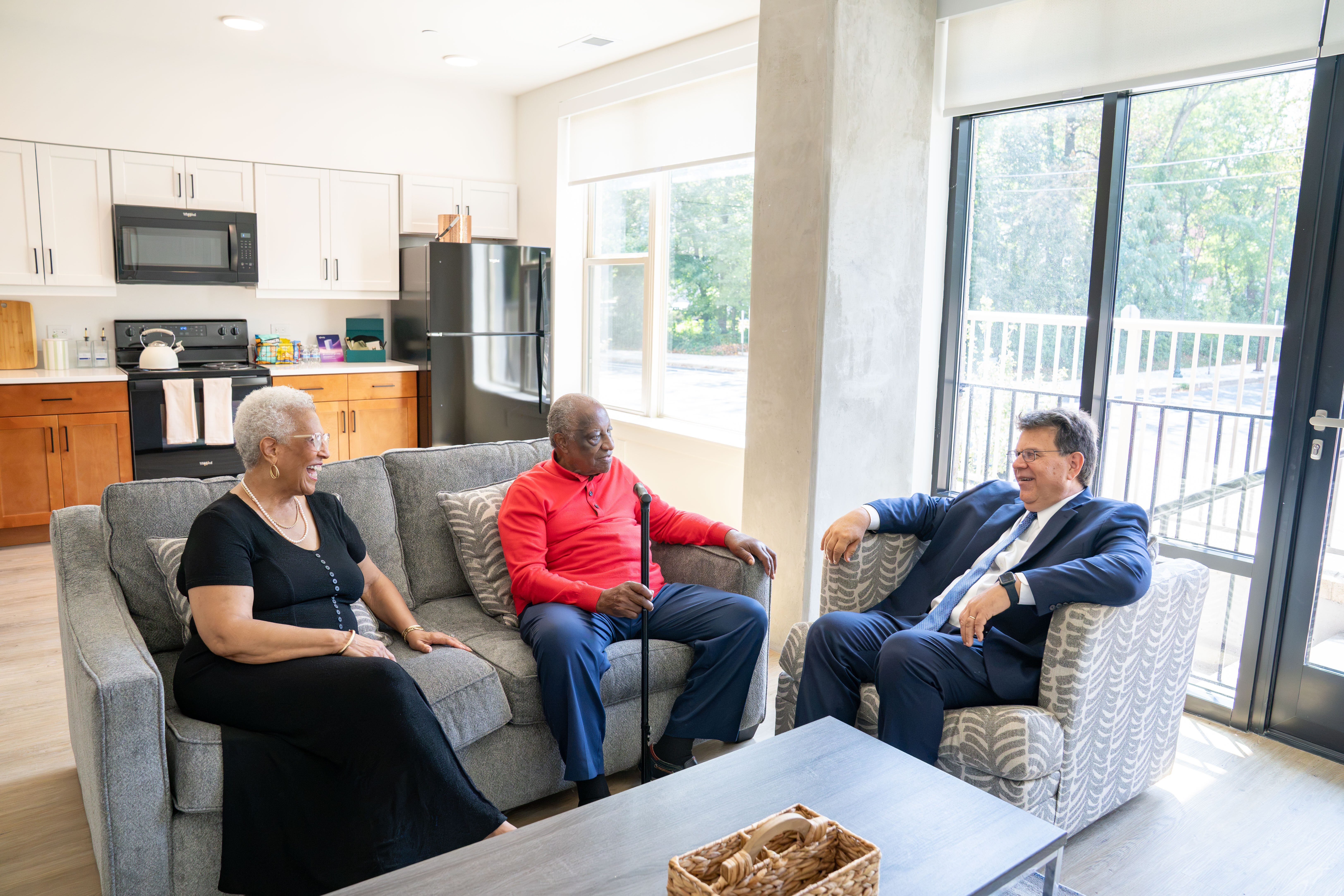
At risk of homelessness
When Montgomery County resident Nina’s divorce led to her leaving her existing home, her initial solution was to share an apartment with a roommate while seeking a steady job. But after her roommate fell behind on the rent, both women were evicted. With the rising cost of living not matched by wages, Nina was vulnerable to homelessness.
An affluent suburb of Washington, D.C., Montgomery County’s property prices are high and households typically need $104,595 a year to live self-sufficiently. Still job-hunting – which made affording a market-rate rental difficult – Nina’s long-term solution arrived when she heard about The Residences at Forest Glen in Silver Spring, Md., MHP’s biggest affordable housing project to date. This 189-unit community development, located close to public transportation hubs and the Capital Beltway, opened in 2025, and was designed to house people earning less than 60% of area median Income.
Many Americans are struggling to find affordable homes. One reason is the shrinking supply of lower-cost rental housing. Between 2014 and 2024, the number of U.S. rental units renting for less than $1,000 per month fell from 8.3 million to 5.8 million, according to the Harvard Joint Center for Housing Studies, while housing costs continue to consume a growing share of household income.
Rob Goldman, president of the Montgomery Housing Partnership, says residents like Nina “come to us via multiple routes. We advertise, but we also have relationships with lots of service providers who know what we do. If they’re helping a client who’s looking for an affordable home, they can tell them about MHP and our properties.”
Loans, grants and equity
Support for MHP, which has developed 35 properties representing 3,250 affordable housing units, has included a $175,000 Housing for Everyone grant from the TD Charitable Foundation for the Forest Glen project. The bank also provided grants for smaller, specific initiatives, such as workforce development, Goldman adds. “Their support has been great.”
In addressing housing affordability, TD considers the bigger picture of what is needed on a human level and focuses on community initiatives, says Andrew Warren, Head of Community Development Lending at TD Bank U.S. “We can talk about the many buildings we've funded, but what we do is really about the individuals and their stories."
There are three key challenges in community lending and investment, he says: development costs are significantly higher than even five years ago; subsidy resources that facilitate low rents are limited; and it takes too long to get a project built, leased and occupied when so many Americans are in need of stable housing.
“We are both a lender and a long-term investor. Equity is critical, and owning an interest as an equity partner is part of our strategy," Warren says. "But we are also there to ensure that the building and its operators are delivering rental housing to the communities that need it, with the intention of delivering the best for residents.”
As the owner of New Atlantic Development, a Boston-based real estate developer that specializes in affordable housing, Bill Madsen Hardy acknowledges the frustrating lag between concept and delivery. It was 2018 when he first saw the potential of redeveloping a derelict building in Boston’s Nubian Square as affordable live-work rental spaces for artists. New Atlantic chose TD as its banking and equity partner for the redevelopment. Construction finished in 2025, the leasing and operations process have been completed, and in 2026 the building at 2147 Washington St. welcomed its first residents.
This Roxbury neighborhood is the heart of Boston’s Black creative community, he says, although gentrification has uprooted many of the original artists who moved into and improved rundown spaces for low rents. As often happens in emerging creative neighborhoods, their efforts boosted property values, attracted developers and consigned affordability to the past.
“Boston has always needed more affordable housing, so I coupled that with the concept of supporting Nubian Square as a cultural district," Madsen Hardy says. "While we are primarily affordable housing developers, we specialize in preserving artist housing and studios. That’s why it was important to start a project for affordable spaces dedicated to artists in perpetuity.”
Although the uncertain economy and rising costs made financing the project a constant challenge, he says, TD fully bought into the mission, understanding the catalytic effect that New Atlantic’s development could have on the neighborhood. “They were with us all along – they even opened a TD branch a block away from the building during our construction – and were supportive where a lot of other lenders or investors would not be. It’s hard to attract investment in this sector.”
“Loans are important, but being able to be an investor when equity is scarce across the U.S. is what makes TD stand out,” Warren says. In 2025, TD provided more than $1 billion in construction financing to add and preserve new units in affordable housing projects and has committed $5 billion total over three years. TD is on track to continue that trend, he adds.
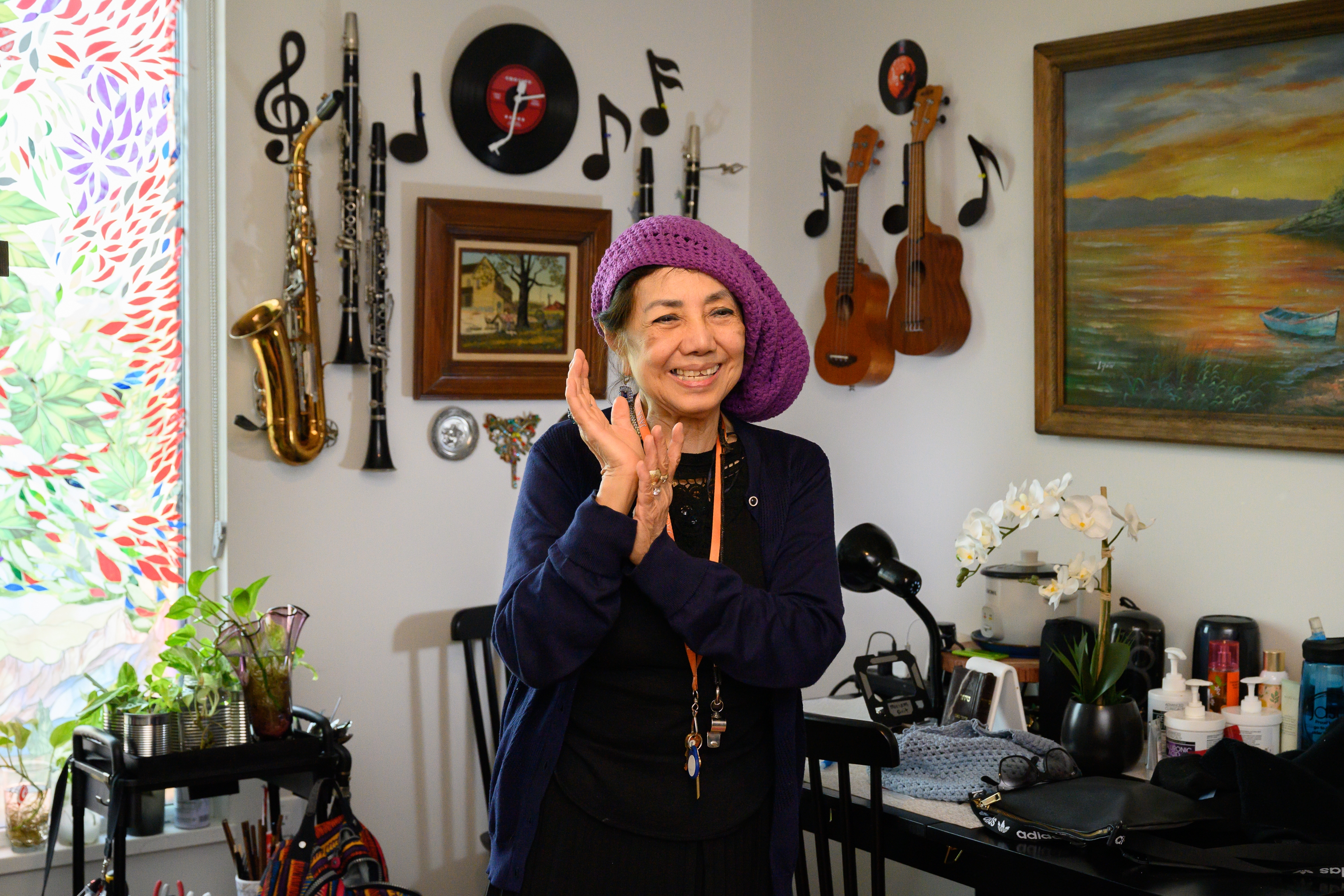
Preserve and renew
New Atlantic’s aim is to protect existing buildings as well as bring new ones to communities in need. Its redeveloped Nubian Square building has 62 rental units, for which there were 4,200 applications. “That’s kind of the norm for subsidized affordable housing in Boston,” Madsen Hardy says.
The building at 2147 Washington St. also has a 4,000-square-foot shared workspace for artists, fitted with special equipment for textile-making, 3D printing, woodwork, metalwork and ceramics. Affordable studio memberships will open up access for non-resident artists too.
“This project was born out of the community,” Madsen Hardy says. “The City of Boston worked with its people to come up with a request for proposals from developers. What they wanted was affordable homes for rental or ownership, artist units, and commercial space below market price.”
Most importantly, he says, the community wanted to preserve an existing nonprofit, Haley House, located next to the site. “It’s a neighborhood institution that does youth training in culinary arts, has run a soup kitchen for homeless people since the 1960s, and employs people transitioning out of incarceration.” As part of its development project, New Atlantic added a 2,000-square-foot retail space to Haley House’s commercial kitchen for the Haley House Bakery Cafe.
Supporting projects such as this expands TD’s role to much more than banking, Warren says. “It’s about working with communities where we know there will be a positive impact – not only by creating housing affordability, but also the community and economic development efforts that come from investment and public-private partnerships.”
Although America continues to face headwinds and further financial challenges, Warren remains optimistic about the future of housing affordability. “Housing is a topic that everyone is talking about right now. There is an urgency to help, and bipartisanship even at the federal level, which should give everyone a sense of optimism,” he says.
“The construction business is used to volatility and these types of challenges, so we’re seeing a lot of people come up with really innovative solutions to address the housing crisis. The partners we work with are very creative and are figuring out solutions through new technologies, new construction methods and new financing structures.”
And while it will take time to truly fix America’s housing predicament, Warren says, “There is definitely movement in the right direction. We always go forward.”
FAQs
Why is affordable rental housing becoming harder to find in the United States?
Rising construction costs, limited housing subsidies and a declining supply of lower-cost rental properties have contributed to the U.S. housing affordability crisis. According to Harvard’s Joint Center for Housing Studies, the number of rental units costing less than $1,000 per month fell from 8.3 million in 2014 to 5.8 million in 2024.
How do banks help finance affordable housing development?
Banks support affordable housing development through construction loans, equity investments, and partnerships with nonprofit and private developers. These financial resources help developers build new rental properties, preserve existing affordable housing and overcome funding challenges that can delay or prevent projects from moving forward.
What are the biggest challenges facing affordable housing developers?
Affordable housing developers face rising construction expenses, limited subsidies, complex financing requirements and lengthy development timelines. Strong demand adds urgency: A 62-unit affordable artist housing development in Boston’s Nubian Square financed by TD received approximately 4,200 applications, illustrating the gap between available affordable homes and community demand.
What is TD doing to address the housing affordability crisis?
TD supports housing affordability through community development lending, equity investments and philanthropic grants. The bank has committed $5 billion in lending over three years to affordable housing, including more than $1 billion in construction financing in 2025. Through the TD Charitable Foundation Housing for Everyone program, TD provides grants to nonprofits focused on housing affordability.
How does TD work with developers to create affordable housing?
TD works with affordable housing developers throughout the East Coast. In Boston, TD served as both banking and equity partner for New Atlantic Development’s 62-unit affordable artist housing project in Nubian Square. In Maryland, the TD Charitable Foundation provided a $175,000 Housing for Everyone grant to Montgomery Housing Partnership in support of the 189-unit Residences at Forest Glen development. These partnerships demonstrate how different forms of financial support can help developers bring affordable housing projects to communities.