
TD Wealth® Insights: Broadening Markets, Artificial Intelligence and a New Fed Era in Q2 2026

The second quarter of 2026 marked a sharp turnaround for markets. Major equity indices, including the S&P 500, Nasdaq and Russell 2000, delivered their strongest quarterly gains since 2020, driven by continued enthusiasm for artificial intelligence (AI), easing geopolitical concerns and shifting expectations for monetary policy.
Three themes helped fuel the recovery.
First, AI remained a major source of market leadership. Strong corporate earnings and continued investment reinforced confidence that AI will remain an important driver of economic and market growth.
Second, signs that there could be diplomatic progress in the Middle East helped calm investor concerns. The temporary resumption of shipping through the Strait of Hormuz eased pressure on energy markets and improved risk sentiment.
Third, investors began adjusting to a new Federal Reserve Chair. Kevin Warsh's focus on controlling inflation prompted markets to reassess the timing and pace of future interest rate cuts.
Perhaps most encouraging was the broadening of market participation. Small-cap stocks and emerging markets joined large-cap technology companies in driving returns, creating a healthier market backdrop than one reliant on a narrow group of leaders. Fixed income returns were also positive across major segments, although gains were more modest as Treasury yields moved higher.
Markets are still evaluating what a Warsh-led Federal Reserve means for policy, but the early message has been clear: restoring inflation credibility remains a priority.
Recent inflation data have been encouraging, supporting the view that price pressures may gradually moderate. Our current outlook calls for inflation to remain elevated but gradually easing over the coming months, with economic growth holding above 2% and unemployment settling near 4.3%
We expect the Federal Reserve to remain on hold as policymakers assess incoming economic data, with the potential for interest rate cuts to resume in 2027. The greatest source of uncertainty continues to be developments in the Middle East. A lasting resolution could accelerate the decline in inflation and provide an additional boost to global growth.
Higher oil prices remain a risk but one that appears manageable under current conditions. The U.S. economy is less energy-intensive than in previous decades, benefits from being a net energy exporter and has been supported by healthy consumer finances. However, a prolonged disruption to energy supplies or further escalation in regional tensions could alter the economic outlook.
At the same time, we remain constructive on the AI investment cycle and do not believe it represents a speculative bubble. While investors should monitor rising debt levels used to finance AI infrastructure, capital spending continues to translate into meaningful earnings growth. Importantly, the impact of AI-related investment is extending beyond tech and semiconductor companies, creating potential opportunities for investors in industrials, infrastructure, power and real estate. As AI evolves toward robotics, autonomous vehicles and AI-powered manufacturing, the opportunity set is becoming increasingly broad.
Our outlook remains modestly positive. Strong earnings growth, broadening market leadership, continued AI investment, supportive fiscal policy, and improving labor market conditions provide reasons for optimism.
At the same time, investors should remain mindful of risks, including renewed geopolitical tensions, inflation that remains above target and stretched valuations in certain segments of the market.
We continue to maintain a modest overweight to equities and a modest underweight to fixed income. Within fixed income, we favor higher-quality sectors and a short-to-intermediate duration focus given ongoing uncertainty around inflation and the timing of future Fed rate cuts. Within equities, diversification remains important. We continue to see opportunities not only in U.S. large-cap stocks, but also in small- and mid-cap companies, international equities and emerging markets as market leadership broadens.
The first half of 2026 demonstrated the importance of diversification and staying invested. Despite geopolitical conflict, inflation pressures and changing monetary policy expectations, markets proved resilient. While volatility may continue, maintaining diversification across both equities and fixed income, while remaining focused on long-term objectives, remains the foundation of successful investing.
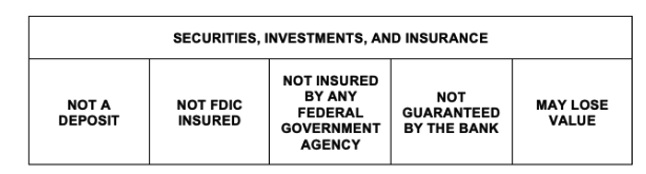
TD Wealth® is a business of TD Bank N.A. Banking, investment management and trust services are available through TD Bank. Securities and investment advisory services are available through TD Private Client Wealth LLC (TDPCW), a US Securities and Exchange Commission registered investment adviser and broker-dealer and member FINRA/SIPC. Epoch Investment Partners, Inc. (Epoch) is a US Securities and Exchange Commission registered investment adviser that provides investment management services to TD Wealth. TD Bank, TDPCW and Epoch are affiliates.
Capital market expectations are estimated projections of general market performance and economic conditions and are not intended as an offer or recommendation to invest in a specific asset or strategy or as a promise of future performance. The views expressed are subject to change without notice based on economic, market, and other conditions. Information and data provided have been obtained from sources deemed reliable but are not guaranteed.
The information contained herein is current as of July 2026 and is for educational purposes only. All expressions of opinion are subject to change without notice based on shifting market conditions. It is general in nature and not intended for as a recommendation for any specific investment product, plan, strategy, or other purpose. Data contained herein from third-party providers is obtained from what are considered reliable sources. However, its accuracy, completeness, or reliability cannot be guaranteed.
The policy analysis provided in this article does not constitute and should not be interpreted as an endorsement of any political party.
By receiving this information, you agree with the intended purpose described above. Any examples used in this communication are generic, hypothetical and for informational purposes only. TD Wealth® and its affiliates and representatives do not suggest that the recipient take a specific course of action or any action at all. TD Wealth® and its representatives do not provide legal, tax or accounting advice. Prior to making any investment or financial decisions, an investor should seek the individualized advice of their personal financial, legal, tax and other professionals that take into account all of the particular facts and circumstances of an investor's specific situation. TD Wealth® and its affiliates are not liable for any errors or omissions, and you understand that TD Wealth® is not responsible for any loss sustained by any investor who relies on this communication.estors.
Investing in securities involves risk of loss that clients should be prepared to bear. The investment performance and success of any particular investment cannot be predicted or guaranteed, and the value of a client’s investments will fluctuate due to market conditions and other factors. Investments are subject to various risks, including, but not limited to, market, liquidity, currency, economic and political risks, and will not necessarily be profitable. Past performance of investments is not indicative of future performance. Diversification is not a guarantee against loss.
TD Bank and its affiliates and related entities provide services only to qualified institutions and investors. This material is not an offer to any person in any jurisdiction where unlawful or unauthorized. No part of this publication may be reproduced in any form, or referred to in any other publication, without express written permission. All rights reserved. All trademarks are the property of their respective owners. The TD logo and other trademarks are the property of The Toronto-Dominion Bank or a wholly-owned subsidiary, in Canada and/or other countries.
©2026, TD Bank, N.A., Member FDIC
Sign up for the latest updates from TD Stories delivered to your inbox twice a week.