
In many households, primary financial responsibilities quietly land on one person's shoulders. That person pays the bills, tracks the accounts, knows the passwords and understands the investments. When life is full, it's often simply easier for one person to take the lead.
And it can work well... until it doesn't. When the system breaks, whether through death, prolonged illness or other incapacitation, the surviving spouse or partner isn't just grieving — they're suddenly dropped into a world they've never had to navigate and need answers to questions like:
- Where's the money?
- How do I access the accounts?
- What bills are due?
- Who do I call?
“If you’re in this situation right now — overwhelmed, unsure and trying to piece things together — you’re not alone,” said Mark Hasenauer, Head of Financial Planning & Retirement, TD Wealth. “It happens across every age group, every income level and every kind of family. The good news is that understanding your household finances is a solvable problem.”
The first steps
What surprises many people, according to Mark, is that even if nothing was prepared, there is still a path forward.
Responsibility for managing finances often doesn't start where you might think. But Mark suggested "the first thing to do is to look at the checking account and the credit card statements" instead of trying to track down each individual bill.
If you do not have access to those accounts, reach out to your bank as soon as possible to find out the process to provide authority to access accounts for another person.
You will then need to obtain authority to access other sites the person may have used for bills and financial management. The documents below are commonly needed after the death of a spouse, partner or family member:
- Death Certificate: Often required to access or close accounts, so request multiple copies.
- Short Certificate: Confirms legal authority to manage the estate and is frequently required by financial and social media companies.
If a spouse is incapacitated rather than deceased, different documentation may be required:
- Powers of Attorney (POA): Designates someone to handle financial and potentially other responsibilities in situations where an individual is not capable of making decisions. It must be completed when the individual is at least 18 years old and of sound mind — before incapacity or death.
- Guardianship: If no POA exists, a court may appoint a guardian to make personal and financial decisions on the individual's behalf.
Understanding the information
To get a good sense of bills that need to be paid, Mark recommended looking at a few months’ worth of checking account and other statements and identifying recurring payments. This can provide a picture of what is being paid monthly, quarterly or another time frame, such as mortgage or rent, utilities, insurance, subscriptions and medical bills.
While you may not uncover every expense being paid, it does start the process of taking over household finances.
"Patterns emerge quickly,” Mark said. “What might have felt like chaos at the beginning starts to become a system."
When help feels complicated
Family members and friends with the best intentions may often try to step in to help explain and identify finances, but this can often come with its own challenges. It's not uncommon for a parent to resist advice from their child, for instance, or for someone to be embarrassed about disclosing their financial picture to a friend.
Mark suggested that a neutral third party often has more success in these situations. That person may be a trusted financial advisor, accountant, or attorney. Often, dealing with a third party helps remove some of the emotional components. Professionals are experienced in these situations, so they know how to prioritize what needs to be done.
"This isn't about someone taking over, but more about someone translating what needs to be done," Mark said. "The goal isn't control, it's clarity."
Meeting goals
Once you can get a firm grasp on both financial assets and debts, you should be able to answer the following questions, which will help to build a simple framework for financial order.
- What do I have?
List accounts, assets, insurance and income sources.
- What do I owe?
Identify debts, bills and other obligations.
- What do I need right now?
Monthly living expenses, immediate costs
- What will I need later?
Long-term income, retirement and/or long-term care insurance or savings
There are many resources available to learn how to manage finances. For example, the TD Digital Academy hosts step-by-step videos for setting up online banking, using bill pay and other features. Additionally, the TD Bank Learning Center offers comprehensive modules to provide knowledge on a wide range of personal financial topics.
"If you put in the time to thoroughly understand your finances, you'll come out on the other side," Mark said. "Not because everything was perfect, but because you kept going."
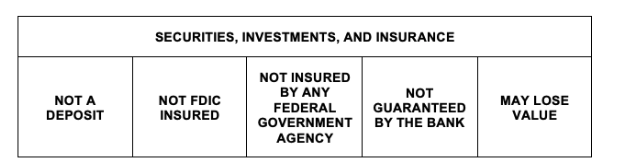
TD Wealth® is a business of TD Bank N.A. (TD Bank). Banking, investment management and fiduciary services are available through TD Bank. Securities and investment advisory services are available through TD Private Client Wealth LLC (TDPCW), a US Securities and Exchange Commission registered investment adviser and broker-dealer and member of FINRA/SIPC. Insurance products and services are offered through TD Wealth Management Services Inc., ("TDWMSI"), a licensed insurance provider. TD Bank, TDPCW and TDWMSI are affiliated. TD Bank and its affiliates do not provide legal, tax or accounting advice.
This article is for general informational purposes only. It is not intended to provide specific financial, investment, tax, legal, accounting, or other advice and should not be acted or relied upon without the advice of a professional advisor. A professional advisor will recommend action based on your personal circumstances and the most recent information available.