
What We Get Wrong About Retirement — and What Matters More

Retirement planning involves more than investments and savings. TD Wealth® shares five often-overlooked factors that can support financial security and fulfillment in retirement.
When people think about retirement, the conversation almost always starts and ends with money: How much do I need to save? When can I stop working? Will I run out? These are important questions, but in my experience, the factor that most influences how people actually feel in retirement isn’t purely financial — it’s creating purpose.
The reality is that retirement isn’t just about what you’re retiring from, but what you’re retiring to, and that’s the part many people overlook. Work provides more than a paycheck; it brings structure, connection and a sense of identity. When that disappears, it can leave a gap that no financial plan fully replaces.
The retirees who thrive typically are the ones who have thought beyond the numbers. They’ve invested in relationships, stayed engaged and found new ways to create meaning in their daily lives.
Once a retiree defines their purpose, financial security supports that. Here are other considerations that will help you focus on a rewarding and confident journey through the retirement years.
There are a few financial topics people often hesitate to confront, with long-term care at the top of the list. It’s not an easy conversation, but it’s a necessary one.
Many people don’t realize that long-term care is generally not covered by Medicare, and the cost can be significant. For some, supplemental insurance may not be practical or affordable, which makes it even more important to talk openly about what care might look like, what resources are available and what role family is able to play.
Avoiding the conversation doesn’t reduce the risk of needing potentially costly long-term care, it simply delays the decision.
On the planning side, many know about financial preparation through retirement and investment accounts, but there are also opportunities that are frequently underutilized.
Health Savings Accounts (HSAs) are a good example. While many people think of them as a short-term tool or employee benefit for medical expenses, HSAs can play a much larger role in retirement. Unused funds can be invested and carried forward year after year, creating a tax-advantaged source of savings for future healthcare costs. And after age 65, HSA funds can also be used for non-medical expenses without a penalty, though those withdrawals are generally taxable.
Another resource that may not be fully optimized is Social Security. Filing decisions, such as when to start receiving benefits following eligibility, can meaningfully affect long-term income, particularly for married couples. In some cases, delaying benefit payments can strengthen a retirement plan or provide greater financial protection for a surviving spouse, yet many people make decisions without fully understanding those dynamics.
Retirement planning has long been guided by rules of thumb, like the well-known “4% rule”, which suggests withdrawing about 4% of retirement savings in the first year of retirement and adjusting that amount each year for inflation. While frameworks can be helpful starting points, they aren’t one-size-fits-all, especially in a world where markets, lifespans and individual goals are constantly evolving.
Today, more flexible approaches to withdrawal amounts — ones that adjust based on market performance and personal circumstances — can offer a more realistic way to manage income throughout retirement.
When it comes to retirement planning, one of the most common questions is: “Is it too late for me?” The answer is almost always no.
Whether someone is just starting out or getting a late start, the fundamentals remain the same: build an emergency fund, save consistently, take advantage of opportunities like catch-up contributions and, where possible, create flexibility by diversifying how those savings are taxed. Even small steps, taken consistently, can add up to meaningful progress over time.
Ultimately, a successful retirement isn’t defined by a single number. It’s defined by how you spend your time, who you spend it with and whether your money supports the life you want to live.
The people who seem happiest in retirement aren’t focused on their balance sheet; they’re focused on their next project, their family and their community. They’ve built lives they’re excited to show up for and that’s what retirement is really about.
The sooner we start planning for that, not just financially, but personally, the more confident and better prepared we’ll all be.
What is the biggest retirement planning mistake people make?
Many people focus exclusively on their savings target and overlook how they will spend their time, maintain relationships and find purpose in retirement.
What should I consider when creating a retirement income plan?
In addition to savings and investments, consider healthcare costs, long-term care planning, Social Security timing, tax-efficient savings strategies and flexible withdrawal approaches.
Is the 4% rule still a good strategy for retirement withdrawals?
According to TD Wealth, the 4% rule, which suggests withdrawing 4% of your total retirement savings beginning in year one of retirement, can be a helpful starting point but it may not fit everyone. A flexible withdrawal strategy that adjusts based on market performance, life expectancy and personal needs may better support income throughout retirement.
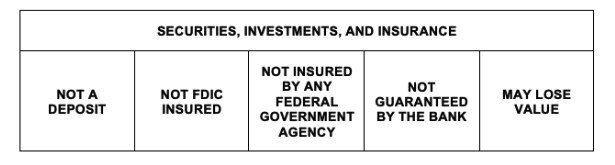
TD Wealth® is a business of TD Bank N.A. (TD Bank). Banking, investment management and fiduciary services are available through TD Bank. Securities and investment advisory services are available through TD Private Client Wealth LLC (TDPCW), a US Securities and Exchange Commission registered investment adviser and broker-dealer and member of FINRA/SIPC. Insurance products and services are offered through TD Wealth Management Services Inc., ("TDWMSI"), a licensed insurance provider. TD Bank, TDPCW and TDWMSI are affiliated. TD Bank and its affiliates do not provide legal, tax or accounting advice.
No part of this publication may be reproduced in any form, or referred to in any other publication, without express written permission. All rights reserved.
©2026, TD Bank, N.A and/or its affiliates. All rights reserved. The TD logo and other TD trademarks are owned by The Toronto-Dominion Bank or its affiliates and are used under license.
TD Bank, N.A., Member FDIC
This article is for general informational purposes only. It is not intended to provide specific financial, investment, tax, legal, accounting, or other advice and should not be acted or relied upon without the advice of a professional advisor. A professional advisor will recommend action based on your personal circumstances and the most recent information available
Sign up for the latest updates from TD Stories delivered to your inbox twice a week.